Roses is a city on the Costa Brava in Catalonia, Spain. It’s name derives partially from the Ancient Greek colony, Rhode (named by explorers from Marseille) founded here sometime between the 8th and 5th centuries BCE among the furthest west of the empire. The Romans came along and eventually threw out the Greeks, then the area was apparently abandoned until the 10th Century CE when it became a medieval monastery and site of the citadel near the center of the Catalan city we know today.

It’s very much a vacation destination, and from the looks of the RVs and trailers here at Camping Rodas (sounds kinda like Rhodes, no?), attracts tourists mostly from France, and the Netherlands, among other parts of Europe in early Spring.
The city itself is nestled into a cove on the Gulf of Roses in the Mediterranean, with a beach promenade extending all the way to the port at the northern end. It’s a small, quiet place and exactly what we needed to start our vacation.

From László:
We ate breakfast at the campground restaurant. The food was really good. People here speak Spanish and Catalan. I ate a bacon sandwich: Bread. Bacon. More bread.
After breakfast, we went to the beach and swam. Then we ate lunch. I had dumplings and a chocolate waffle. Then we went to the museum-castle thing. It’s like a medieval castle thing with a big rock wall and salamanders. A long time ago (in a galaxy far far away) in a place we now call Roses, the Greeks started a settlement and they named it Rhode. We know that because they found pottery and coins and stuff.

We also saw my friend and co-worker Peter! He happened to be traveling through here from Marseille and joined us for dinner and breakfast.

Camping in Europe is something we first tried in Basque Country in 2023 during my sabbatical. We camped twice in total on that trip. It’s a fun and affordable way to see a more rural, maybe heavily touristed, place without paying the premium to be in a hotel — if one is even an option. In the Basque area we stayed in, there were a few hotels nearby. Camping let us stay between the two and nestle into nature. In Germany, the nearby town was the tourist hub to three of the most famous castles in all of Bavaria and we certainly had more affordable accommodations.
If you’re not comfortable learning the local language (or getting by without), it may be more difficult, and you’re more on your own with the amenities. Just like camping anywhere, you’re buying your own TP and there’s no turndown service. Instead, you get a temporary home with the opportunity to meet your fellow travelers plus: an outdoor pool, access to bikes, and the outdoors.
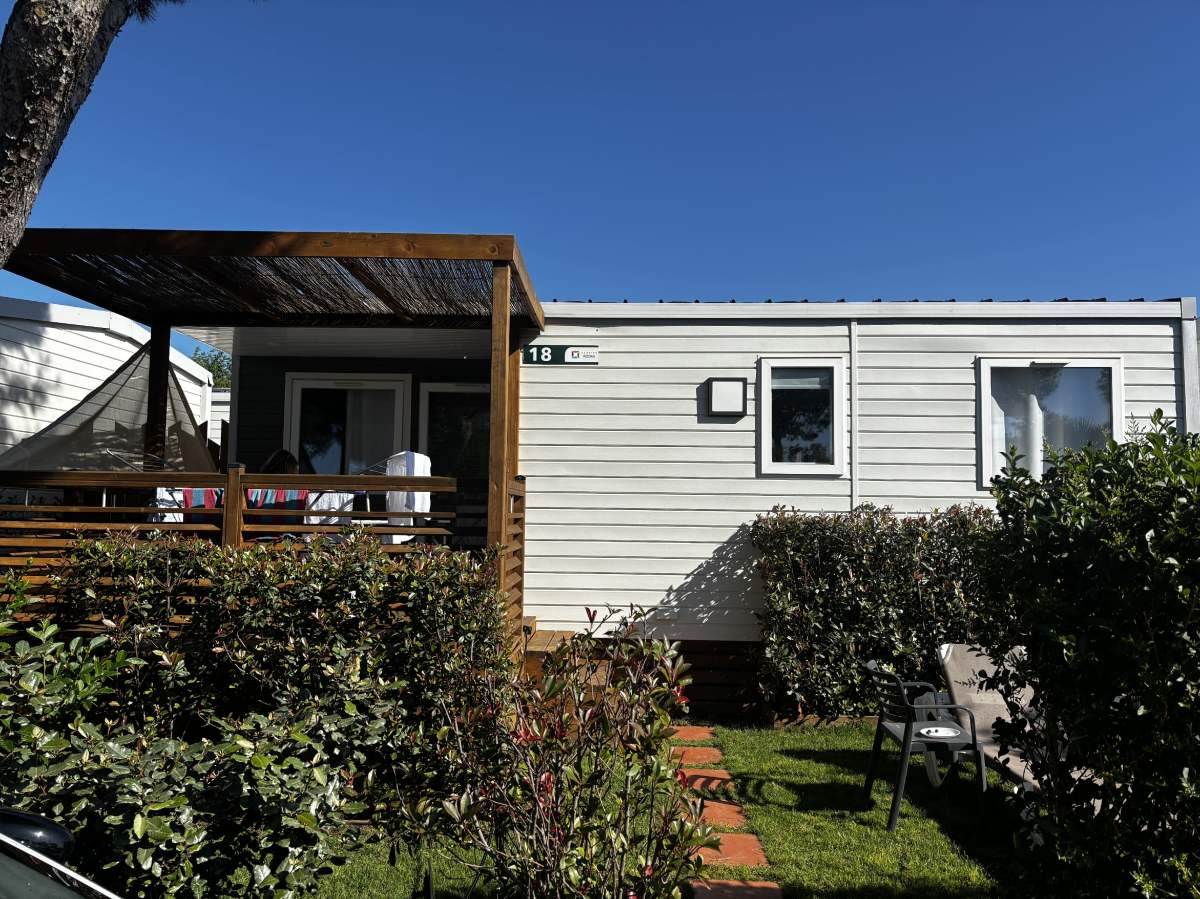
Most commercial campgrounds have some equivalent of a cabin or permanent travel trailer set up. We’re staying in a cabin while we’re here. We have a hedge row surrounding the plot as well as an Aleppo Pine in the front yard. We made dinner last night and have basically everything we need. It feels like a home.

Advice to future travelers: Bring towels, a cutting board, and go grocery shopping early.