Tucked into the basement of Block37, opposite the Starbucks, is a small storefront packed with pinball machines old and new. It’s not an arcade but a museum showing all variety of machines that launch steel balls onto a tilted field filled with point-scoring obstacles. It’s called The Flip, and all the machines (inside the museum) are either set to free play or include the coins to play them. Many of them come with an educational caption to show you the machine’s place in the history of arcade gaming and ball-bearing launchers.
László and Danielle went there on our first day in town, then brought me to play even more the next day. I’m glad he did because pinball is fun, especially when you don’t need a pocket full of quarters to play it.
Something László and I both learned was that pinball didn’t always have flippers. Some are more basic plinko type games, but where you launch the ball up a ramp instead of dropping it from the top. In these games you would launch upto 10 balls. Some of them had special catches where the ball would return rather than being “out.” Others had electromechanical bumpers that would bounce the ball around a little, but gave you no control over how to keep the ball in play.
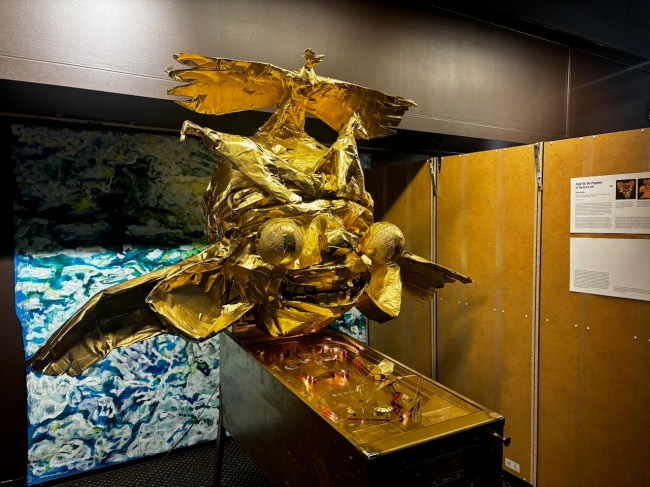
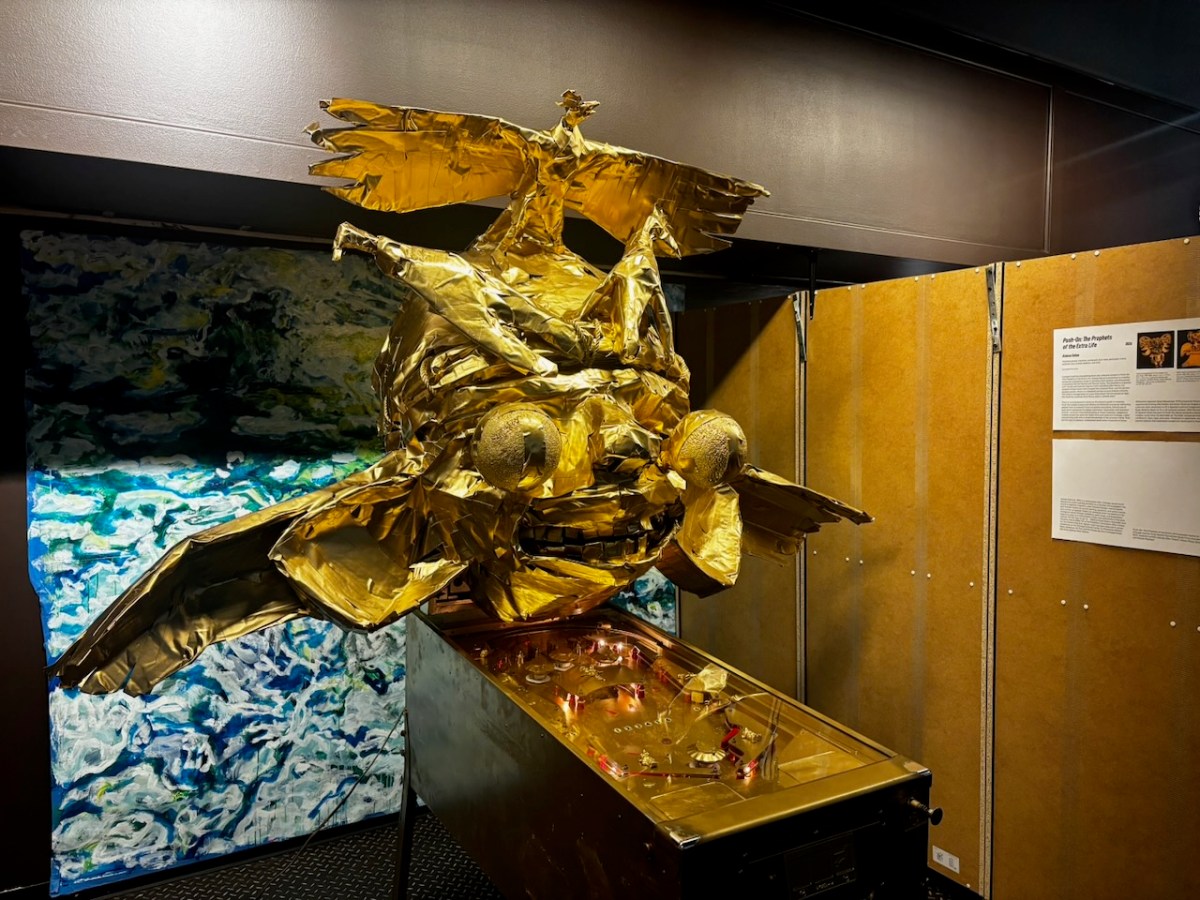
The two machines that caught László’s attention, though, were the Monopoly machine and one called Push-on: The prophets of the Extra life, (AKA, the golden pinball machine), an installation by the artist Alonso Galue that combines sculpture and play with myth making grounded in indigenous South American traditions.
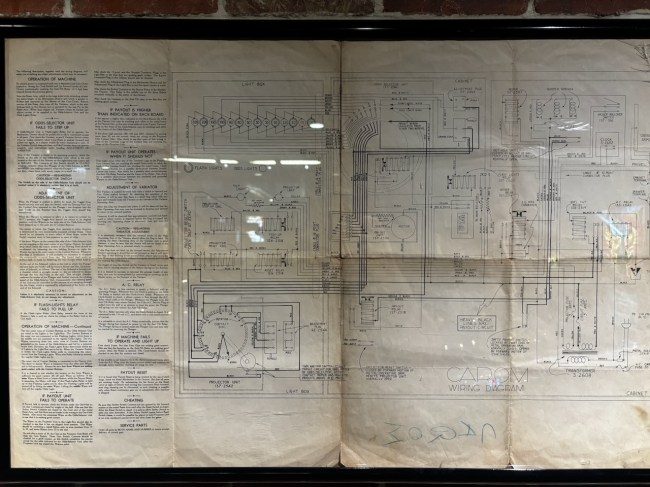
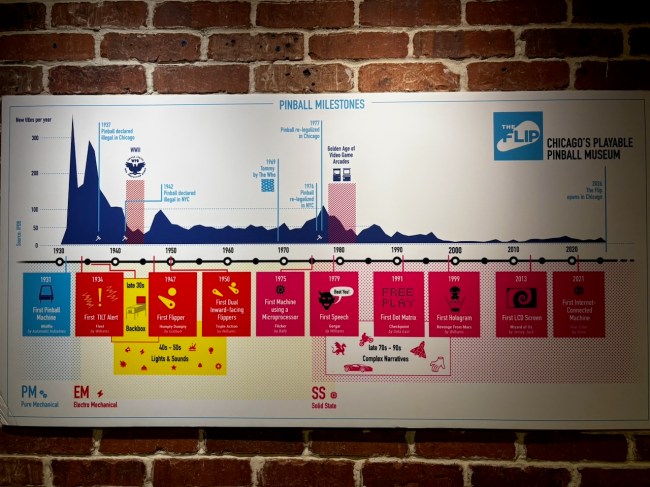
Other items on display were a pachinko machine, timelines tracing the history of pinball (which nearly vanished after video arcade games took hold). There were also a couple video machines from the 1980s to illustrate what people were playing instead of pinball at the time pinball nearly died out.
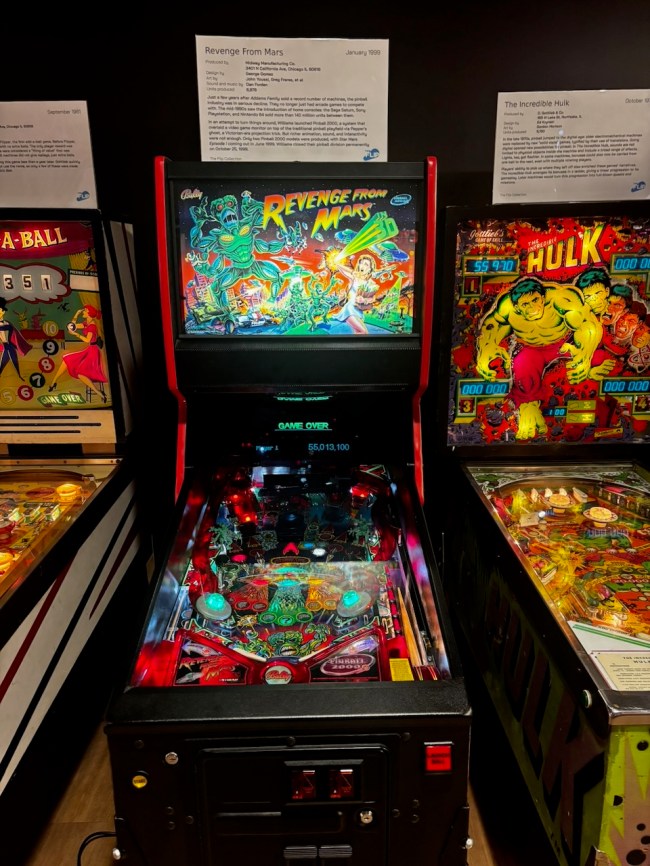
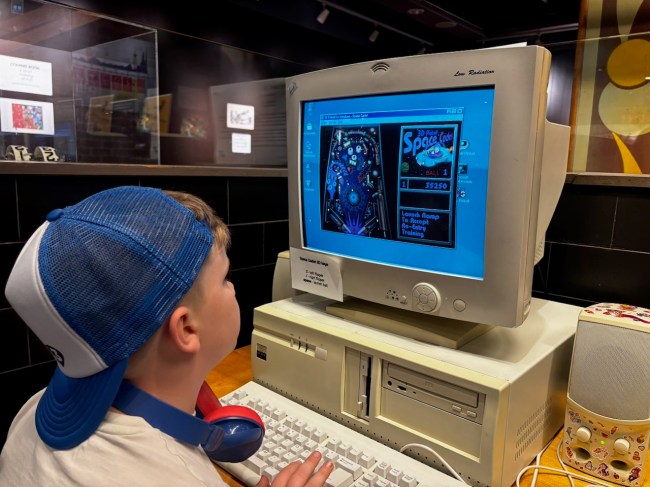
Finally, of course, were many solid-state and dot-matrix display machines including Revenge from Mars, which reminded me of Mars Attacks and featured a Pepper’s Ghost style projection of a video screen onto the game board. A neat concept that apparently didn’t take off, but very much should have. Then, to round it all out was a retro PC playing Space Cadet 3D (for Windows XP, 95 with Plus) and a few other PC games from late 90s and early 2000s.
The museum opened opened in late June 2026, so they’re rapidly expanding. Show up on a Saturday morning and see the mechanics mending machines and trying to make sense of worn out schematics. In an era where our machines often don’t have serviceable batteries and planned lifespans, it’s always refreshing to see someone breathe new life into something made many decades ago.